

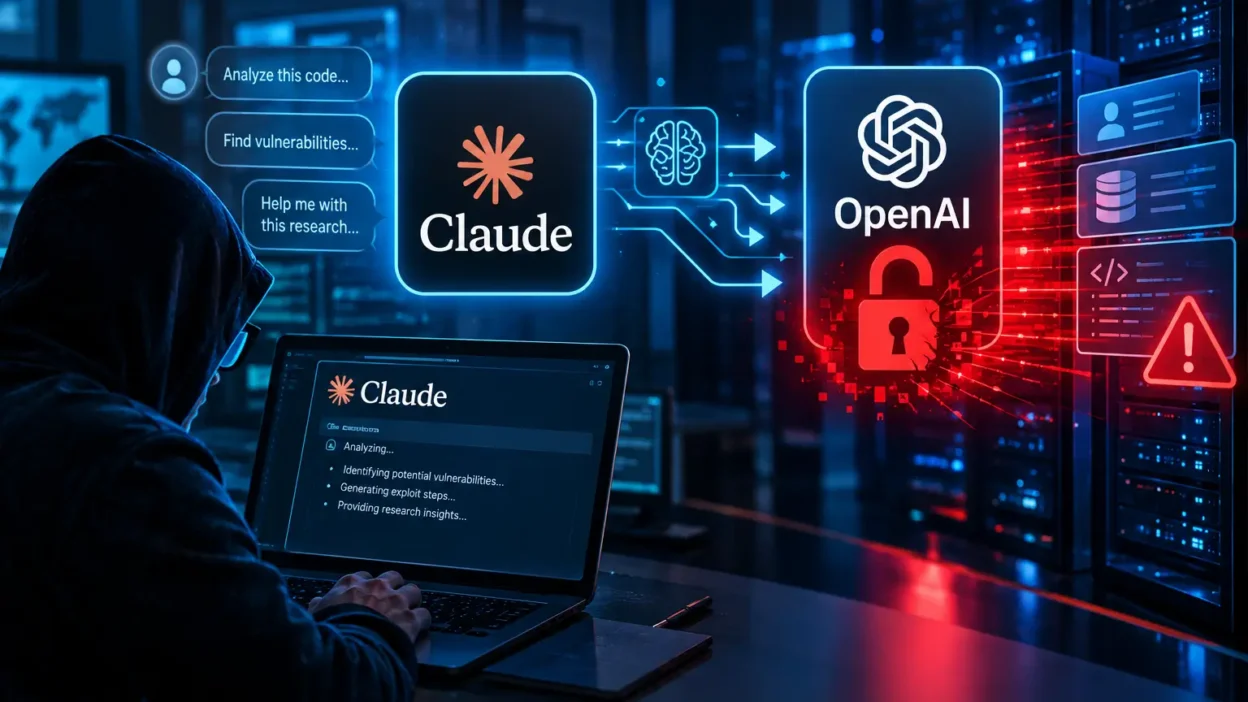
Using Anthropic’s Claude, Hacktron AI security specialists successfully gained access to internal systems of OpenAI, showing how more capable AI models may be used to launch sophisticated cyberattacks.
The researchers, who are part of the bug bounty program at OpenAI, signed into a chatbot OpenAI employee’s account and accessed the company’s internal GitHub code repositories. OpenAI acknowledged the event and commended the researchers for responsibly revealing their findings, saying it had corrected the vulnerabilities involved.
The incident highlights increasing concerns over the cybersecurity risks posed by advanced artificial intelligence (AI) systems, especially as models grow more capable of executing complex technical tasks with minimal human input.
Hacktron tried to build the exploit with Anthropic’s Claude Opus 4.8, but could not get a working attack in multiple attempts. Anthropic then released the next version, Claude Opus 5, and the researchers tried again, and almost immediately had success.
“The experience shows how advances in standard artificial intelligence capabilities can make AI-assisted cyberattacks more effective,” the researchers added. They said each new generation of devices is becoming more powerful, which might provide attackers access to increasingly sophisticated tools.
Hacktron is built on a bespoke build of Claude, made for authorised cybersecurity professionals, to help with legitimate security research. But those same skills ultimately allowed the researchers to break into the systems of the AI research firm, raising questions about how security-focused AI tools might be deployed without facilitating their misuse.
The attack only took a few days of activity by the autonomous AI agent and a few hours of human interaction, the researchers note. This drastically reduced the time and expertise needed to uncover and exploit complex software vulnerabilities in the past.
The investigation was part of a bigger project called “HEIF Heist,” which looked at how apps and web services handle image file formats. Three researchers uncovered vulnerabilities in platforms including Slack, Zoom and Meta for less than $3,000 in AI tokens spent in a two-month period.
Hacktron said AI is upending the old assumptions of cybersecurity since it’s successfully transforming specific expertise into computing power. Tasks that would often require the work of very capable teams, lots of resources, and months of planning can now be achieved in days or even hours.
As AI’s attack potential continues to improve, the researchers say businesses need to re-examine their existing security assumptions.